How Often Should You Clean Gutters in Ridgeland, SC?
Ridgeland gutters need cleaning twice a year, plus a pre-storm check. See the month-by-month schedule for pine and live oak lots. Call 123-456-7890.
Read guide →October 21, 2026
Jasper County gutters need a full cleaning and a hardware check before the Atlantic hurricane season opens on June 1, because tropical rain arrives faster than a clogged gutter can drain it. The South Carolina State Climatology Office's report on Tropical Cyclone Debby lists 12.45 inches at the Hardeeville 6.7 ENE gauge from August 5 to 9, 2024, and 14.30 inches at Beaufort 5.7 NW in the same storm.
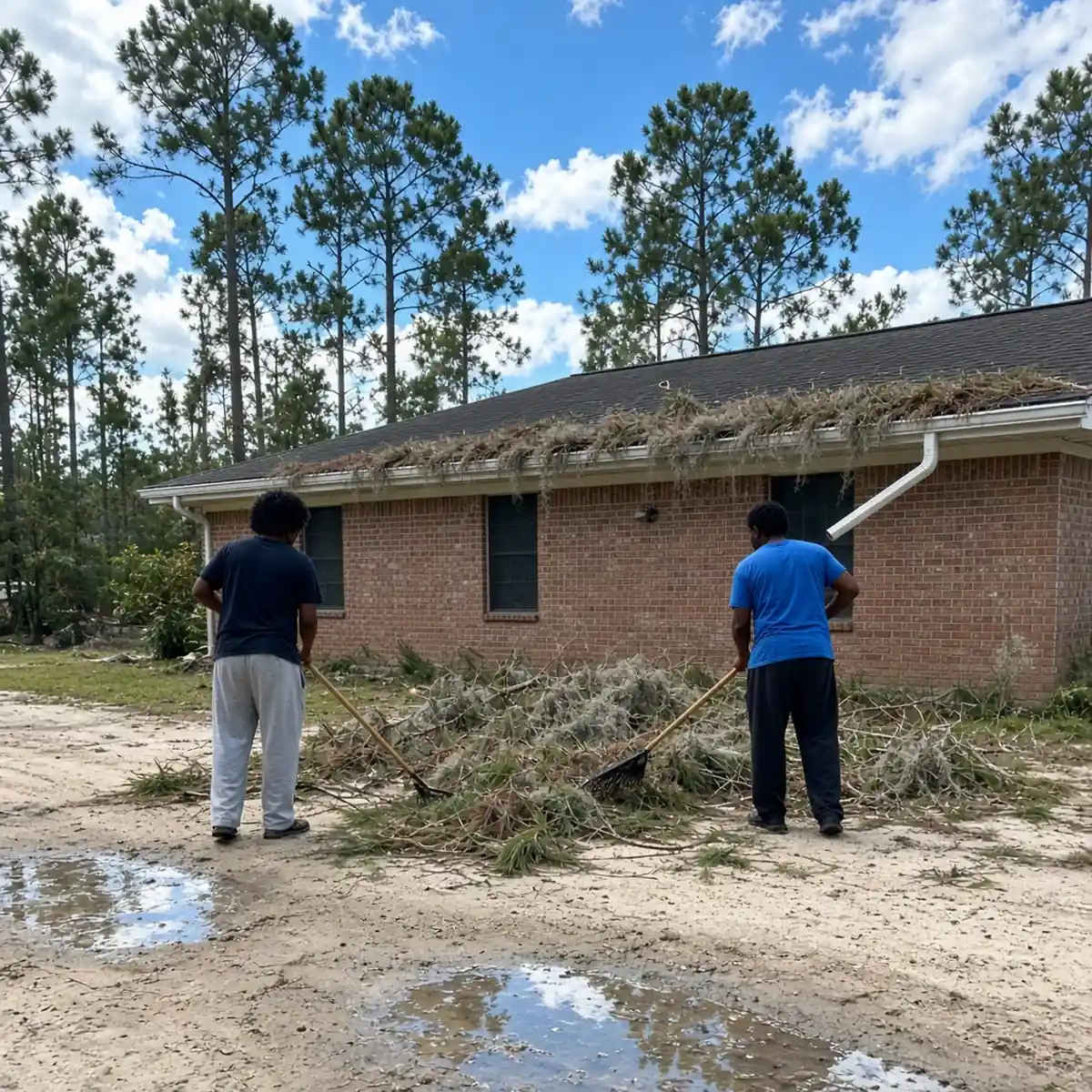
Clean the gutters and flush the downspouts in May or early June. Tighten or replace loose hangers, reseal leaking corners, and make sure every downspout empties away from the house. After the storm passes, clear the storm debris before the next rain.
Tropical rain tests a gutter system in a few hours. The State Climatology Office lists 10.63 inches at a CoCoRaHS gauge at Bluffton 7.2 NW on October 8, 2016, the day Hurricane Matthew came ashore near Cape Romain, according to the National Weather Service. At the U.S. Geological Survey's figure of 27,154 gallons per inch of rain on an acre, a 1,500-square-foot roof sheds about 9,940 gallons in 10.63 inches of rain. A gutter with a half-full trough or a packed elbow overflows at the first heavy band, the same pattern covered in gutters overflowing in heavy rain.
Work through this list in May or early June.
After the storm passes, wait for the wind to drop and for daylight before anyone climbs a ladder. Then clear the green needles, twigs and Spanish moss that wind strips into the troughs, flush the downspouts, and look for bent sections, loose downspouts and gutters pulled off the fascia. Photograph any damage before it is cleared if you plan to file an insurance claim.
| Damage | What it means | Fix |
|---|---|---|
| Gutter hanging off the fascia | Hangers tore out or fascia rotted | Re-hang on new hangers; replace soft fascia |
| Bent or crushed section | A limb or wind load bent the trough | Replace the section or the run |
| Downspout torn loose | Straps or outlet failed | Re-attach with new straps and outlet |
| Leaks at corners after the storm | Sealant cracked under load | Clean and reseal the joints |
| Water stains on the fascia | Water ran behind the gutter | Check the board for rot before re-hanging |
Gutter repair in Ridgeland covers each of these fixes. Call 123-456-7890 to reach a repair pro after a storm.
Never climb a ladder in wind, in rain, or near downed power lines. Wet roof edges and soft ground under a ladder cause most storm-cleanup falls. Two-story homes and heavy storm debris are jobs for a professional with a ladder stabilizer and fall protection.
Recent storms show what Jasper County gutters face nearly every season.
| Storm | Date | What was recorded nearby | Source |
|---|---|---|---|
| Hurricane Matthew | October 8, 2016 | 10.63 inches in one day at Bluffton 7.2 NW; landfall near Cape Romain | SC State Climatology Office; NWS Charleston |
| Tropical Storm Irma | September 2017 | 9.07 inches at Beaufort 4 NNE; 61 mph gust at Beaufort Marine Corps Air Station | SC State Climatology Office |
| Hurricane Dorian | September 4–5, 2019 | Category 3 storm passed just off the coast with tropical storm force winds and hurricane force gusts near the SC coast | NWS Charleston |
| Hurricane Idalia | August 2023 | Gusts of 40 to 55 mph in Jasper County; trees down across the northern part of the county | NWS Charleston |
| Tropical Cyclone Debby | August 5–9, 2024 | 12.45 inches at Hardeeville 6.7 ENE; 14.30 inches at Beaufort 5.7 NW | SC State Climatology Office |
Five storms in nine seasons brought either heavy rain, high wind or both to the Ridgeland area. Call 123-456-7890 to get the gutters ready before the next one.
The Atlantic hurricane season runs from June 1 to November 30. The storms in the table above arrived between late August and early October, so the gutters need to be clear and tight through the whole stretch, not only in June. A late-summer check, after the heavy August rains and before the fall needle drop, keeps the system ready for September and October storms.
Storm debris from the gutters and yard goes to a Jasper County drop-off center. The county's Solid Waste and Recycling Centers page lists leaves, pine straw, limbs and branches as yard trimmings accepted at every center, including the Haphazard, Roseland and Grays centers in Ridgeland. Contractors are not allowed to use the centers, so a gutter pro hauls their own debris away separately. After a major storm, check county announcements for added debris pickup.
Documenting the damage before cleanup protects a claim.
Clean the gutters in May or early June, after the spring live oak leaf drop and before hurricane season begins on June 1. That timing clears both the fall pine needles that settled over winter and the spring oak leaves. Homes under heavy pine cover benefit from a quick check again in late summer, ahead of the peak storm months.
No. Gutters that are clean and firmly hung stay up through most storms and carry water away from the house. Taking them down leaves the fascia, siding and foundation exposed to the full runoff. The better prep is a cleaning, tightened hangers and resealed corners before the season starts.
Very little. A clogged gutter overflows as soon as the water arriving from the roof outpaces the drain through the debris, which in tropical rain happens within minutes. A Jasper County gauge near Hardeeville recorded 12.45 inches during Tropical Cyclone Debby in August 2024, far more than any clogged gutter can carry.
Coverage depends on the policy, the cause of the damage and the deductible, so read the policy and talk to the insurer. Photograph the damage before clearing it, keep any bent pieces, and get a written repair scope from the contractor. Damage from a falling limb during a storm is treated differently from damage caused by long-term neglect.
Check for gutters pulled away from the fascia, bent or crushed sections, loose or detached downspouts, and leaks at corners. Clear the storm debris from the troughs and flush the downspouts before the next rain. Look at the fascia behind any loose section for soft or stained wood, which needs replacing before the gutter is re-hung.
If your gutters are full heading into storm season, call 123-456-7890 to reach a local gutter pro. A pre-season gutter cleaning service in Ridgeland clears the troughs and downspouts before June 1.
Ridgeland gutters need cleaning twice a year, plus a pre-storm check. See the month-by-month schedule for pine and live oak lots. Call 123-456-7890.
Read guide →Why Ridgeland gutters pull away from the fascia, the warning signs, and the fixes: hidden hangers, new fascia or new gutters. Call 123-456-7890.
Read guide →Why pine needles and live oak leaves clog Lowcountry gutters twice a year, and how to keep them out. Guide for Ridgeland, SC homes. Call 123-456-7890.
Read guide →