How Often Should You Clean Gutters in Ridgeland, SC?
Ridgeland gutters need cleaning twice a year, plus a pre-storm check. See the month-by-month schedule for pine and live oak lots. Call 123-456-7890.
Read guide →October 21, 2026
Gutters pull away from the fascia when the fasteners lose their grip on the wood, and the two forces that loosen them are weight and rot. A clogged gutter full of wet pine needles carries far more load than an empty one, and every inch of rain on a 1,500-square-foot roof sends about 935 gallons toward it, using the U.S. Geological Survey's figure of 27,154 gallons per inch of rain on an acre. When that water can't drain, it soaks the board the gutter hangs on.
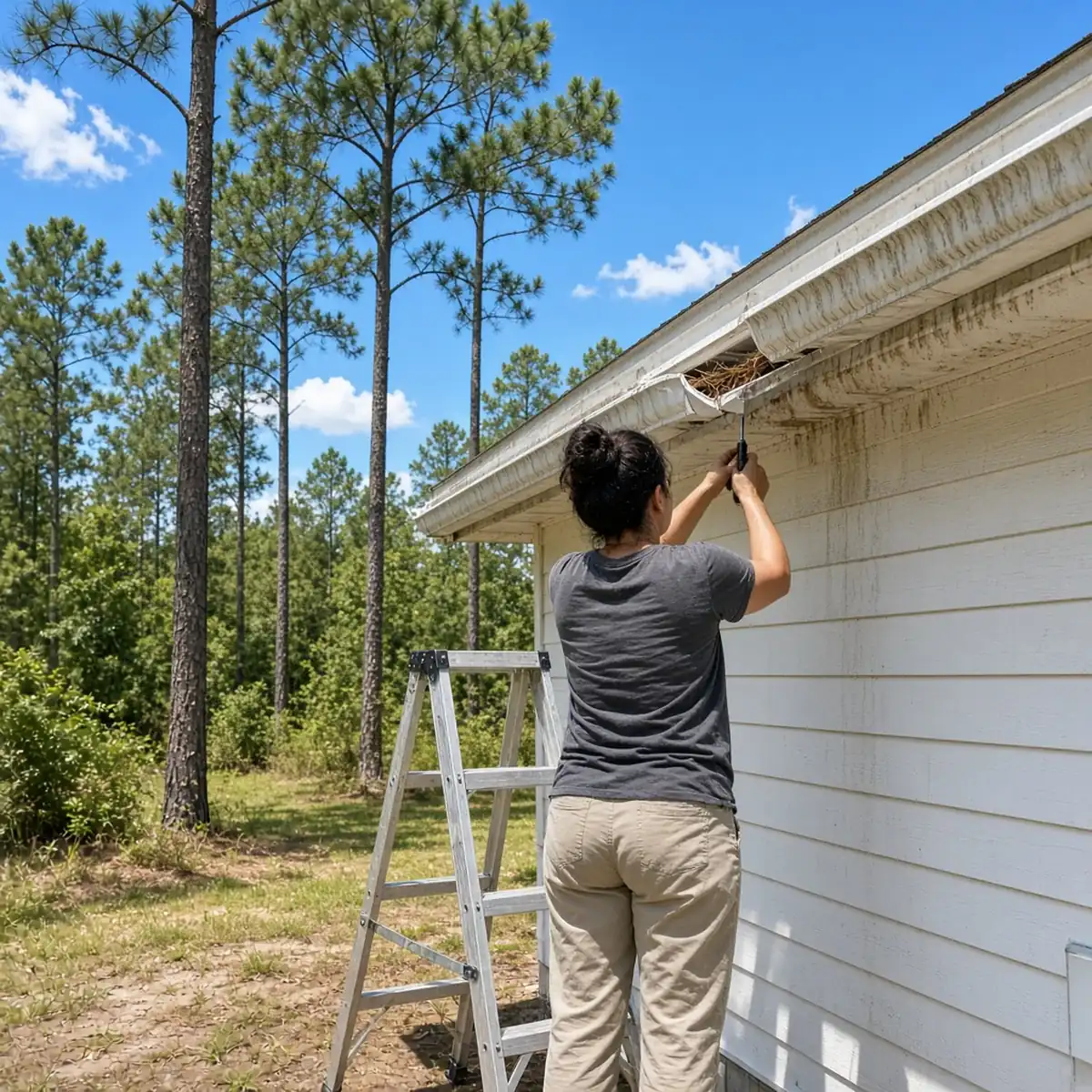
A gutter that pulls away needs two checks: the fasteners and the fascia board behind them. Loose spikes on sound wood are fixed by re-hanging the run on hidden hangers screwed into the rafter tails. Soft or rotted fascia has to be cut out and replaced first, or the new fasteners tear out again.
Catch the problem early by watching for these signs.
Older gutters hang on long spikes driven through a tube (the ferrule) into the fascia. Heat, cold and the weight of debris work the spikes loose a little at a time, and a backed-out spike shows on the face of the gutter.
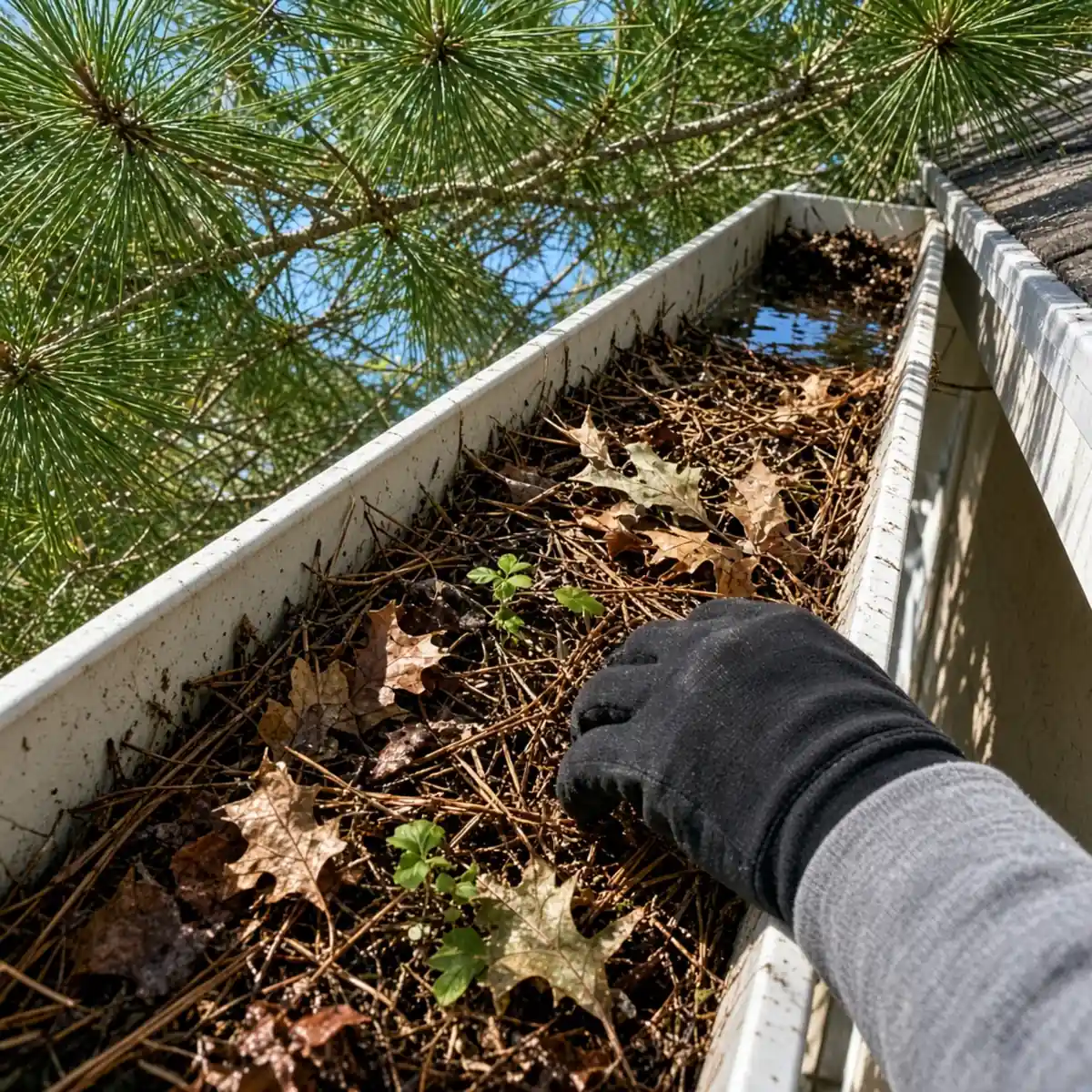
A gutter packed with wet needles and oak leaves holds standing water along its length. Every hanger carries that weight, and the weakest one gives first.
Water that overflows the back of the gutter or sits against the board rots the fascia from behind. Fasteners can't hold in soft wood, so the gutter drops even when the hanger itself is fine.
Tropical rain puts a clogged gutter under its heaviest load. The South Carolina State Climatology Office's report on Tropical Cyclone Debby lists 12.45 inches at the Hardeeville 6.7 ENE gauge in Jasper County over August 5 to 9, 2024. A gutter that was already loose rarely comes through rain like that in line.
Ridgeland homes most at risk fall into three groups in the Census Bureau's 2024 estimates.
| Home type | Share of Ridgeland housing | Why it pulls away |
|---|---|---|
| Built 2000 to 2009 | 30.5% (295 homes) | Original hangers and sealant now past 15 years |
| Mobile homes | 21.2% (205 units) | Light gutters on short eaves drop out of pitch under wet debris |
| Built 1939 or earlier | 11.0% (106 homes) | Fascia boards with decades of overflow behind them |
Call a pro when the gutter is more than a single story up, when the fascia is soft, or when the run has dropped far enough that the pitch is gone. Gutter repair in Ridgeland covers re-hanging, re-pitching and fascia replacement in one visit. Call 123-456-7890 to reach a gutter repair pro.
Checking for pull-away takes about ten minutes from the ground and a few more from a ladder on a single-story home.
Call 123-456-7890 if any check turns up a problem.
| Hanger type | How it attaches | How it holds up |
|---|---|---|
| Spike and ferrule | Long spike through the gutter and a tube into the fascia | Backs out over time; common on older gutters |
| Hidden hanger | Clip inside the gutter, screwed through the back into the rafter tail | Strongest hold and invisible from the ground |
| Strap hanger | Metal strap nailed under the roof edge or shingles | Holds well but needs roof access to install |
| Bracket hanger | Bracket fastened to the fascia, gutter sits in it | Common on half-round gutters; strength depends on the fascia |
Hidden hangers screwed into the rafter tails are the standard fix for a gutter that has pulled away.
Fascia replacement runs in four steps.
Drip edge is a strip of bent metal along the roof edge that directs water off the shingles and into the gutter. Without it, water clings to the underside of the shingles, runs behind the gutter, and soaks the fascia from the top down. A gutter that keeps pulling away in the same spot, with stains running down the board behind it, points to missing or short drip edge. Adding it during a fascia repair stops the rot from coming back.
Yes, once it drops far enough. A loaded gutter that tears free falls with the full weight of wet debris and water in it, and it can take fascia and downspouts with it. Short of falling, a loose gutter dumps water against the siding and foundation instead of carrying it away. Re-hang it before the next heavy rain.
Longer spikes are a short-term patch. They punch new holes in the same fascia and back out again for the same reasons the old ones did. Hidden hangers screwed through the gutter into the rafter tails hold far better. If the fascia is soft, no fastener holds, and the board has to be replaced first.
Press the fascia with a screwdriver tip near a loose hanger. Sound wood resists, and rotted wood gives or crumbles. Other signs are peeling paint, dark water stains, and gaps where the fascia meets the roof edge. A gutter pro checks the board behind every loose section during a repair visit.
Mobile home gutters are lighter and hang from short eaves, so they have less to grip and less strength to carry a load. A season of wet pine needles is enough to drop a section out of pitch. Census estimates put mobile homes at 21.2% of housing units in the Town of Ridgeland, so this is a common repair locally.
No. Most gutters that pull away are fixed by re-hanging them on new hangers and replacing any soft fascia. Replacement is only needed when the trough is bent, split along its length, leaking at many seams, or too small for the roof. A pro decides after cleaning and water-testing the run.
If your gutters are pulling away from the house, call 123-456-7890 to reach a local gutter repair pro. Regular Ridgeland gutter cleaning service keeps the weight off the hangers between repairs.
Ridgeland gutters need cleaning twice a year, plus a pre-storm check. See the month-by-month schedule for pine and live oak lots. Call 123-456-7890.
Read guide →Why pine needles and live oak leaves clog Lowcountry gutters twice a year, and how to keep them out. Guide for Ridgeland, SC homes. Call 123-456-7890.
Read guide →Get Ridgeland and Jasper County gutters ready for hurricane season: what to clean, check and fix before June 1 and after a storm. Call 123-456-7890.
Read guide →