How Often Should You Clean Gutters in Ridgeland, SC?
Ridgeland gutters need cleaning twice a year, plus a pre-storm check. See the month-by-month schedule for pine and live oak lots. Call 123-456-7890.
Read guide →October 21, 2026
Gutters overflow in heavy rain for one of three reasons: a clog in the trough or downspout, a run that has lost its slope, or a gutter too small for the roof above it. Ridgeland tests all three, and the hurricane season gutter checklist covers the storm side. The town's weather station recorded 7.75 inches in a single day on August 26, 1961, the record listed by the South Carolina State Climatology Office, and tropical storms still bring rain in that range.
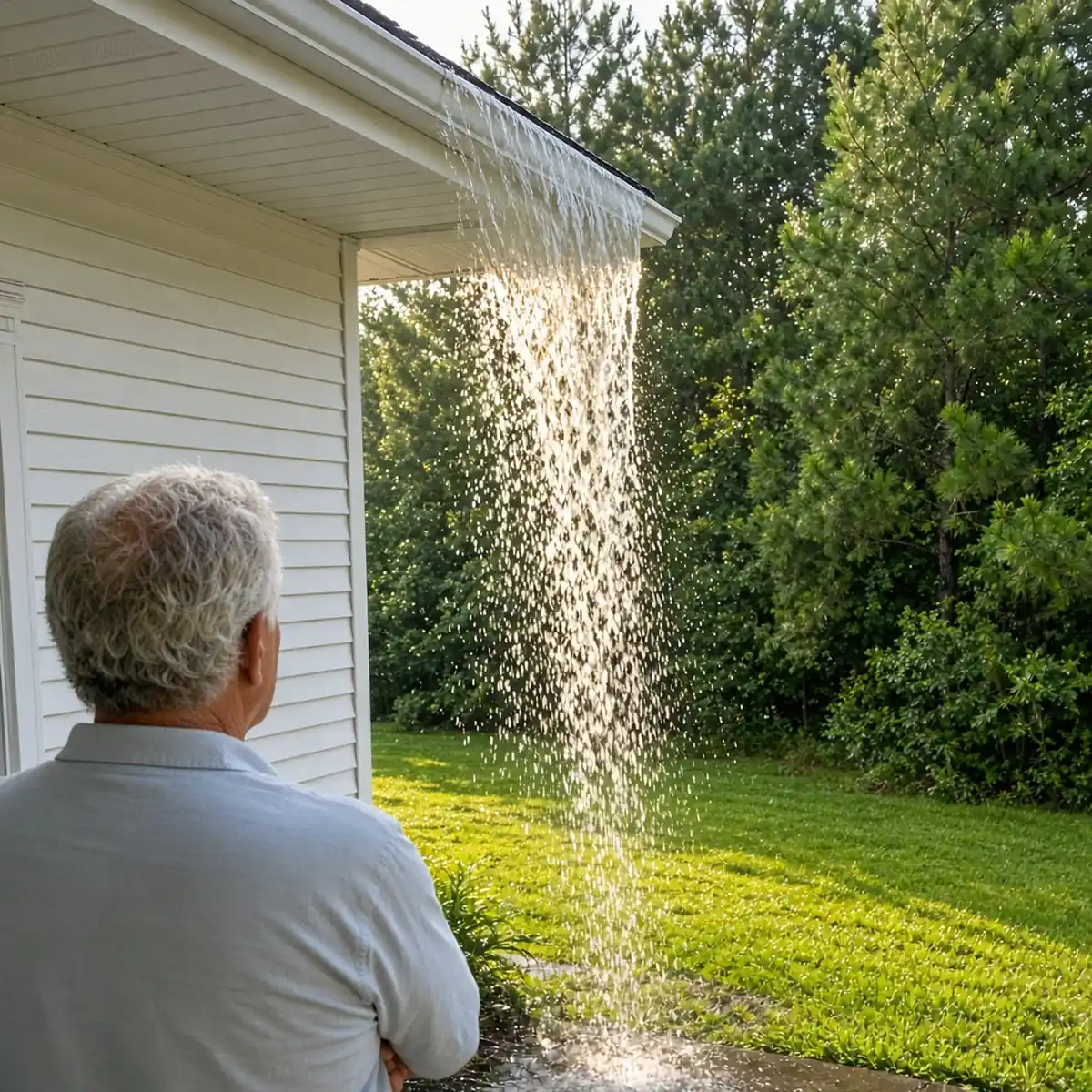
Watch where the water comes over. Overflow at the downspout end points to a clogged downspout. Overflow in the middle of a run points to a sag or a clog in the trough. Overflow along the whole length of a clean gutter, only in the hardest rain, points to an undersized gutter or too few downspouts.
| Where and when it overflows | Most likely cause | Fix |
|---|---|---|
| At the downspout end, in any rain | Packed downspout elbow | Flush and snake the downspout |
| Mid-run, in any rain | Debris mat or a sag holding water | Clean the trough; re-pitch the run |
| At one corner | Valley water hitting the corner, or a leaking miter | Add a splash guard; reseal the corner |
| Along the whole run, only in downpours | Gutter or downspout too small | Upgrade to 6-inch gutters or 3x4 downspouts |
| Behind the gutter, down the fascia | Gutter pulled away or hung too low | Re-hang the gutter tight to the fascia |
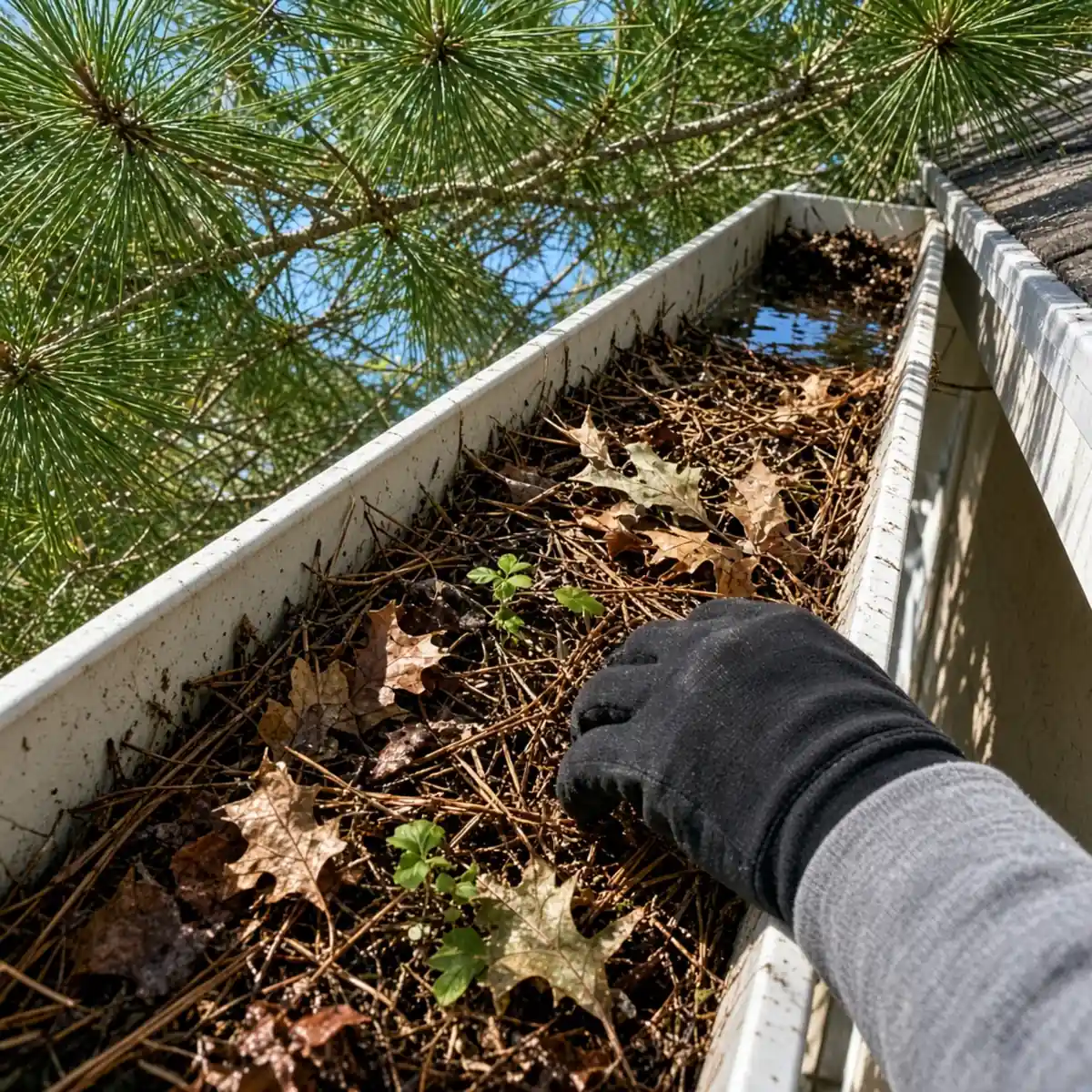
Clogs cause most overflow. Pine needles knit into a mat along the trough, and oak leaves pack the downspout elbow, so water backs up at the first heavy band of rain. Flush the downspout with a hose from the top. If the water rises in the gutter instead of draining, the elbow is packed. A full gutter cleaning in Ridgeland clears the trough and every downspout.
A gutter needs a steady fall toward each downspout. When a hanger loosens, the run sags and holds a pool of water in the low spot, which spills over in heavy rain and rots the fascia behind it. Standing water in a gutter a day after the rain stops is the sign. Re-hanging the run on hidden hangers with the right pitch fixes it; gutter repair covers the work.
A gutter that overflows when it is clean and properly pitched is undersized for the roof. The volume adds up fast. At the U.S. Geological Survey's figure of 27,154 gallons per inch of rain on an acre, a 2,000-square-foot roof sheds about 1,247 gallons per inch of rain. During a burst like the Ridgeland station's 7.75-inch record day, that roof sends more than 9,600 gallons toward its gutters. Large and steep roof planes need 6-inch gutters with 3x4 downspouts, and long runs need a downspout at each end. Seamless gutter installation sizes the new system to the roof.
Summer and fall bring the tropical season, which runs from June 1 into the fall. The Ridgeland station's 1991–2020 normals record 45.02 inches of precipitation a year, according to the State Climatology Office, but tropical systems deliver a large share of a month's rain in a day or two. Gutters that drain fine in an ordinary shower overflow in those bursts.
A water test finds the cause of overflow without waiting for the next storm.
Pooling mid-run means lost slope. A slow or dry outlet means a downspout clog. Drips at seams and corners mean failed sealant. Call 123-456-7890 to have any of those fixed.
Downspout water should end up well away from the house. A gutter that works perfectly still causes trouble if it dumps its water at the foot of the wall.
Water that comes back toward the house from the outlet, or soil that washes out under the downspout, means the discharge needs to move farther out.
Some overflow comes from the roof edge, not the gutter.
Each of these needs a fix at the roof edge or flashing, and a gutter pro spots them during a water test. Call 123-456-7890.
Clean gutters that still overflow have a slope problem or a size problem. A sagging run holds water in a low spot and spills over there. A gutter that overflows along its full length only in the hardest rain is too small for the roof, or the run needs a second downspout. A water test with a hose shows which one it is.
A roof valley funnels water from two roof planes into one short stretch of gutter, and in heavy rain the water shoots past the gutter lip. A splash guard fastened to the gutter at the valley turns the water back into the trough. Valleys that still overflow need a larger gutter or a downspout close to the valley.
Yes. Water behind the gutter runs down the fascia and into the soffit, which rots the wood and stains the siding. It means the gutter has pulled away from the fascia or was hung too low under the roof edge. Re-hanging the gutter tight to the fascia, with drip edge behind it, stops the leak.
A short run on a small roof plane drains through one downspout. Long runs and large roof planes need a downspout at each end, or one every 30 to 40 feet, so water doesn't travel the full length of the gutter before it can drain. Adding a downspout is one of the simplest fixes for overflow on a clean gutter.
Yes. Water that pours over the gutter lands along the base of the house, soaks the soil next to the slab or crawlspace, and splashes back onto the siding. Over time that water washes out soil, feeds mildew and wets the crawlspace. Keeping the gutters clear and the downspout extensions in place sends the water away from the house.
If your gutters overflow in heavy rain, call 123-456-7890 to reach a local gutter pro. See Ridgeland gutter cleaning service for what a full cleaning includes.
Ridgeland gutters need cleaning twice a year, plus a pre-storm check. See the month-by-month schedule for pine and live oak lots. Call 123-456-7890.
Read guide →Why Ridgeland gutters pull away from the fascia, the warning signs, and the fixes: hidden hangers, new fascia or new gutters. Call 123-456-7890.
Read guide →Why pine needles and live oak leaves clog Lowcountry gutters twice a year, and how to keep them out. Guide for Ridgeland, SC homes. Call 123-456-7890.
Read guide →